Is Puppy Yoga the New Circus in Town?
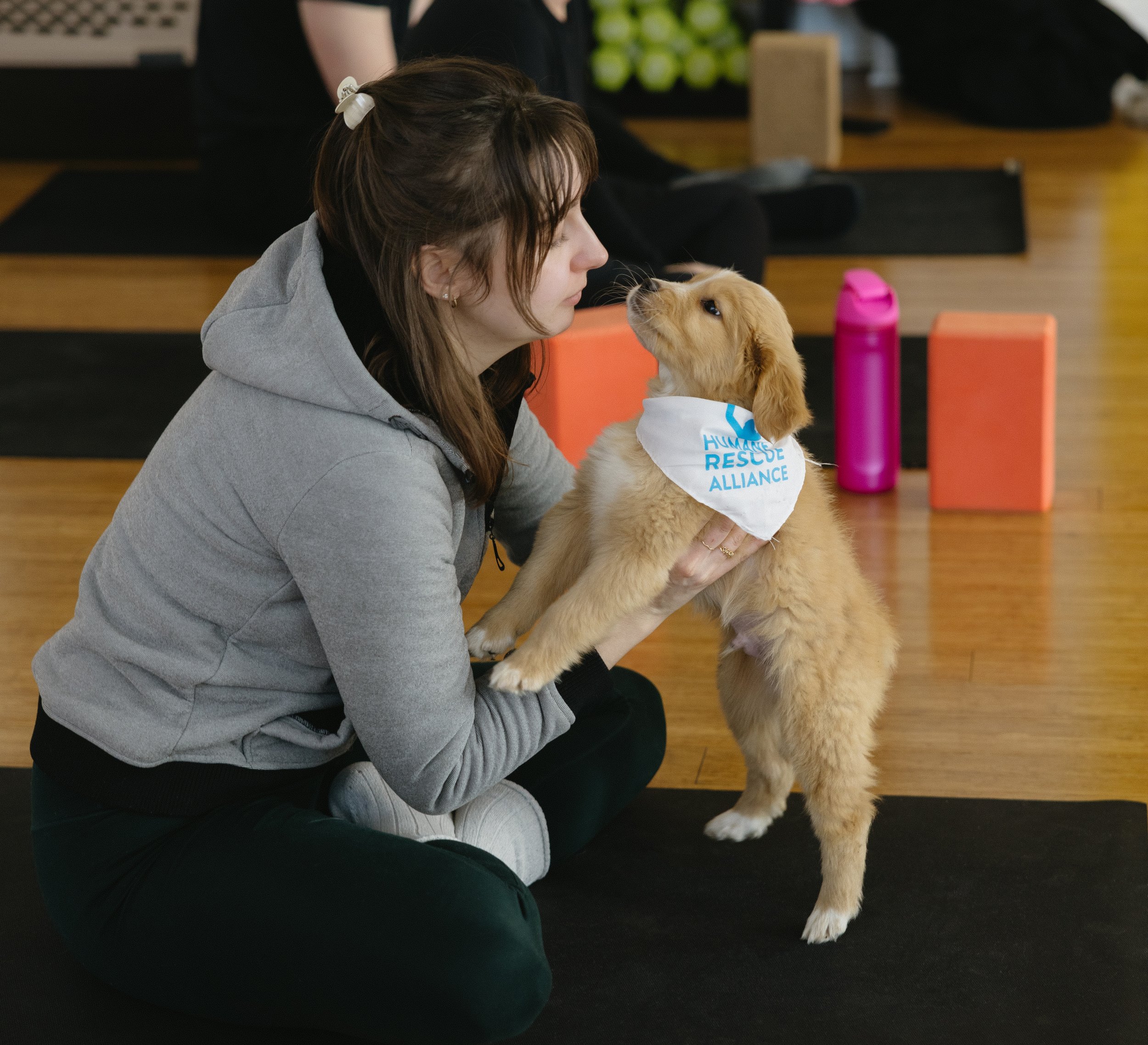
Puppies make almost everything better. I understand the appeal. Put a room full of people together with a litter of puppies and there will be smiles, laughter, photos and probably a few people seriously considering whether they have room for one more dog. Add yoga, package the experience, sell tickets and put the videos on social media, and you have one of the newest trends in the wellness industry: puppy yoga. It looks harmless. It looks joyful. It certainly looks good on Instagram. But I think we need to ask a different question.
Who is this experience actually for?
Because when puppies become the product being sold, we should be very careful about calling what is happening “socialization.”
We have seen this before.
In 1989, one of Humane Rescue Alliance's legacy organizations, the Washington Humane Society, did something that was probably unpopular with a lot of families in Washington. We urged people not to attend the Ringling Bros. and Barnum & Bailey Circus at the D.C. Armory. At the time, the circus was an American institution. Generations of families had grown up watching elephants perform tricks, bears bounce on trampolines and exotic animals parade through arenas. It was fun. It was exciting. And most people buying a ticket did not believe they were supporting animal cruelty. Our humane officers saw something different. When Washington Humane Society officers were allowed to observe the circus animals being unloaded, they reported animals appearing desperate for food and water, elephants with sores and scarring, and handlers repeatedly striking elephants with hooks. Our organization said something then that is worth repeating today:
“It’s not worth a few moments of razzle-dazzle.”
Over time, society caught up. The Federal Animal Welfare Act was expanded to regulate animal exhibitors, including circuses. D.C. eventually required permits governing the care and management of animals used in circuses and other special performances. Communities across the country adopted additional restrictions on performing animals. And something even more important happened. People began asking whether animals should be used this way in the first place. Ringling retired its elephants in 2016. The circus closed the following year after declining ticket sales and rising operating costs. When Ringling eventually returned, it came back without performing animals. The lesson isn't that one law ended the circus. The lesson is that something can be legal, popular and profitable long before we collectively recognize that it is wrong. I wonder whether puppy yoga is another version of that story.
Socialization is not the same thing as entertainment.
One of the most common defenses of puppy yoga is that it is “good socialization” for puppies. Socialization is extraordinarily important. The first months of a puppy's life are among the most consequential periods in their behavioral development. But good socialization does not mean exposing a puppy to as many people as possible for as long as possible. Veterinary behavior experts recommend positive, controlled exposure to different people, animals, environments, surfaces, sounds and experiences. Those experiences should happen without overwhelming the puppy. Puppies must also have opportunities to retreat, play independently and sleep in safe, secure spaces. There is an enormous difference between socialization and stimulation. A young puppy does not need to be passed from stranger to stranger to learn that people are safe. A puppy does not need to be awakened because a paying customer wants a cuddle. And a room full of unfamiliar people, music, handling, movement and constant interaction is not automatically beneficial simply because someone puts the word “socialization” on a website. An undercover investigation of puppy yoga businesses in the United Kingdom found puppies as young as six weeks participating in classes. Investigators documented puppies without access to water, puppies repeatedly being awakened when they tried to sleep, and puppies unable to retreat from customers. Animal welfare experts who reviewed the footage described some of these environments as the opposite of appropriate socialization. Italy ultimately went further, prohibiting puppies from being used in these types of animal-assisted wellness activities. That should make all of us stop and think.
When the puppy becomes inventory.
My greatest concern is not with the idea of someone doing yoga while a puppy happens to be nearby. It is with a business model that requires a continuing supply of very young animals because access to those animals is what customers are purchasing. If your business depends upon having a new litter of eight, ten or twelve-week-old puppies available every weekend, those puppies have become inventory. Their cuteness has been monetized. The younger they are, the more marketable they are. The more people who can interact with them, the more tickets can be sold. The more classes that can be scheduled, the more revenue the business generates. Those incentives are not designed around the developmental needs of a puppy. They are designed around the needs of a business. And when an animal's welfare and a company's revenue come into conflict, we should be asking who has the authority to say, “This puppy is tired. This puppy is overwhelmed. This puppy is finished for the day.” More importantly, does that person have any financial reason not to make that decision? That is the danger of commodifying animals. It does not require someone to wake up in the morning intending to be cruel. It simply requires a system in which the animal's value comes from what the animal can provide to us. The circus industry taught us that lesson.
There is another way.
None of this means people and puppies should not come together. At Humane Rescue Alliance, we believe deeply in the human-animal bond. Bringing people and animals together is central to our work. There can absolutely be humane yoga events involving animals. But the structure matters. Imagine a certified yoga studio partnering with a humane society or legitimate rescue organization. The yoga professionals are responsible for creating a safe and meaningful experience for people. The animal welfare professionals are responsible for the animals. That second part is critical. The humane organization determines which animals are appropriate for the event, whether participation benefits them, how long they participate, when they need rest, whether they want to interact, when they need to leave and what environment is safe for them. The puppies are not there because the business requires puppies to sell tickets. They are animals already in the care of an organization whose responsibility is to protect them. The purpose might be to introduce adoptable animals to the community, raise awareness about fostering, generate financial support for lifesaving programs or simply create positive experiences for animals who can genuinely benefit from them. And sometimes the most humane decision will be that a particular puppy shouldn't participate at all. That is what putting animals first looks like. A yoga studio's expertise is caring for the people in its class. A humane society's expertise and obligation is caring for animals. When those two organizations work together, an event can be designed around both. But a commercial company purchasing or borrowing access to puppies so it can sell an experience to customers is something very different.
Cute should never prevent us from asking hard questions.
Animal exploitation rarely introduces itself as animal exploitation. For generations, children stared in wonder as elephants stood on stools and tigers jumped through hoops. The audience saw entertainment. The animals experienced something very different. Eventually, we learned to look behind the curtain. Puppy yoga has a much softer image. There are no lions in cages or elephants in chains. There are yoga mats, cuddles, smartphones and very cute puppies. That makes it easier not to question. But our responsibility to animals should not depend upon how uncomfortable their exploitation is for us to watch. Before buying a ticket to puppy yoga, ask some questions. Where did these puppies come from? Who is responsible for their welfare? How many classes will they participate in today? Where can they go when they want to sleep or get away from people? Can they choose whether to interact? Is an animal welfare organization involved? Where does the money go? And what happens to these puppies when they are no longer puppies? If the answers are vague, that tells you something. More than 150 years ago, the organization that became the Humane Rescue Alliance was created to protect animals in the District of Columbia. Our Humane Law Enforcement officers still investigate cruelty today. That history has taught us that our understanding of humane treatment must continue to evolve. Sometimes progress begins by questioning something everyone else thinks is harmless. The circus once seemed harmless, too.